
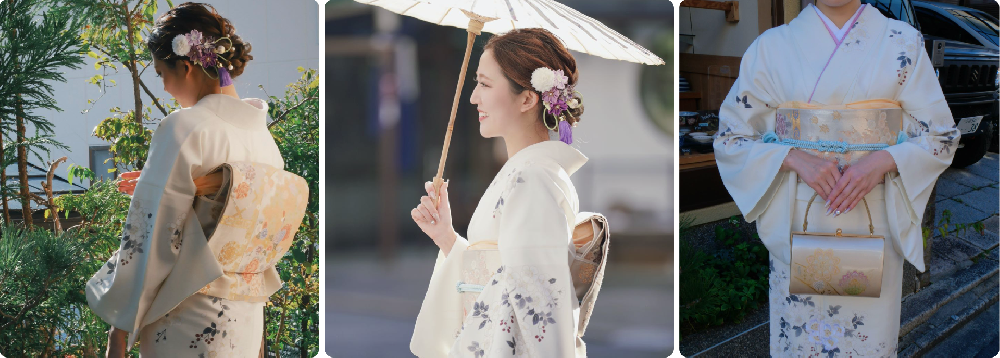
Homongi is a highly formal type of kimono suited to a wide range of formal and semi-formal occasions. Elegant and practical, it is a popular choice of formal wear for women.
Features
1. Patterns
• The pattern of a homongi flows across the shoulders, sleeves and hem as one continuous design, reflecting the kimono's elegance and harmony.
• Patterns are mostly traditional auspicious motifs such as flowers, flowing water and landscapes, in soft, refined colors.
2. Who can wear it
• Any woman, married or unmarried, can wear a homongi, making it one of the most versatile types of kimono.
3. Occasions
• Often worn for formal or celebratory occasions such as weddings, tea ceremonies, school entrance and graduation ceremonies, and celebration parties.
• Compared with furisode and kurotomesode, homongi is more versatile: formal, yet not overly grand.
4. Styling
• Usually paired with an ornate fukuro obi and accessories that echo the kimono's pattern, such as zori sandals and a handbag.
• Hair and makeup are also elegant, for a graceful, refined overall look.
5. Symbolism
• Homongi symbolizes courtesy and grace, expressing the wearer's respect for the occasion and for others while showing her own taste and poise.
With its versatility and elegance, homongi is one of the most adaptable kimono styles and an ideal choice for celebrations and formal events.